The alarm goes off at seven on a Saturday morning because there is a card in Tokyo and the first bout is at eight. Most of the country is asleep. A certain type of boxing supporter is up, kettle on, watching a super-flyweight eight-rounder involving two men whose names have not appeared in a British newspaper and never will. The main event is not until one in the afternoon. There are five hours of boxing before it.
This is the part of the sport that separates the people who follow boxing from the people who watch three fights a year. And it is also where the betting experience differs most sharply depending on which sportsbook someone happens to be using, because the mainstream operators have made a commercial decision about how much of the sport they can be bothered to price.
What the high street actually offers below the main event
Open a major UK bookmaker on the morning of a big card and the coverage tells its own story. The main event will have thirty or forty markets. Method of victory, round groups, over and under on total rounds, scorecard specials, whether it goes to a split decision. Everything.
Then look at the fight three from the top. Winner, and if the bettor is lucky, whether it goes the distance. That is frequently the whole offering. Reviews of British bookmakers consistently find that undercard and prelim markets exist across the major operators but are far thinner than main-event coverage, often limited to those two lines.
Look at a show in Tokyo, Guadalajara, Melbourne or Kyiv that is not being sold as a pay-per-view, and quite often there is nothing at all. No prices, no market, no acknowledgement the event is happening.
There is a reason for this and it is not laziness. Pricing a fight properly takes work. Somebody has to look at two records, work out what those records actually mean, understand the styles, factor in the venue and the judges and the weight-cut history. Doing that for one heavyweight main event is worth it, because millions of pounds will be staked on it. Doing it for a six-rounder in Osaka between two men with a combined thirty fights is not, because barely anybody in Britain is going to bet on it.
Which leaves a gap, and it is a gap the crypto sportsbooks have moved into deliberately.
Full cards, not headline acts
The practical difference is straightforward. A number of crypto-accepting sportsbooks list entire cards rather than the top two fights, and they list international shows that never trouble a high-street app. Japanese domestic cards, Mexican shows, Australian title fights, small-hall promotions across eastern Europe.
For a supporter whose interest in boxing extends past whoever is fighting at the Manchester Arena in a fortnight, that is a genuine difference in product rather than a marketing claim. It is not about deposits arriving in ninety seconds. It is about whether the fight a person actually wants to bet on has a price attached to it.
Whether that is a good thing depends entirely on the bettor. For somebody who watches Japanese boxing every week, knows the domestic scene and has a view on a prospect nobody else has heard of, it is the most useful thing a sportsbook can offer. For somebody who has never seen either fighter and is betting because a market exists, it is an expensive way to fill a Saturday morning.
Records lie, and the market knows it less well than you do
Here is where a knowledgeable boxing supporter has a real edge, and it is one of the few genuine edges available anywhere in betting.
Professional boxing is built on managed matchmaking. A prospect is brought along carefully, fed opponents chosen to provide rounds without providing danger, and arrives at fight number twelve with a record of 12-0 and nine knockouts that looks devastating on a graphic. The combined record of those twelve opponents might be catastrophic. There is a well-worn boxing pastime of adding up the records of a padded prospect’s victims and finding an average somewhere around seven wins and twenty-three defeats.
Meanwhile the journeyman in the opposite corner has fifty fights and thirty-eight losses, which reads like a formality. Except a substantial number of those journeymen have never been stopped in their careers. They have learned, across a decade of taking short-notice fights in other men’s home towns, exactly how to survive eight rounds without getting hurt. They are not there to win. They are there to be professional, take the money and be available again next month.
Anyone who has spent time on BoxRec looking at how those records were built can see this. An automated pricing model applying broad strokes to a small-hall fight frequently cannot. So the knockout price on the prospect gets shortened because 12-0 with nine stoppages looks like a puncher, and the points win, which is the far likelier outcome against a man who has never been dropped, sits there at a price that does not reflect reality.
The same logic runs in reverse. A former Team GB amateur on his fifth professional outing may be vastly better than five fights suggest, because forty amateur bouts do not appear on a professional record. Ticket-selling ability also distorts things badly at domestic level, where the fighter who shifted two thousand tickets gets priced as a favourite over the away fighter who happens to be a nightmare stylistically.
An eight in the morning start needs an account that already works
The global calendar makes boxing awkward to follow and, for anyone betting, awkward to fund.
Cards from Japan typically get going around eight in the morning UK time with main-event ringwalks in the early afternoon. Las Vegas shows put the biggest fight of the night at four in the morning. Riyadh cards land somewhere in the middle. A supporter following the sport properly is placing bets at hours when a bank’s fraud department is at its least helpful and a card payment on an unfamiliar site is at its most likely to be declined.
This is where crypto funding earns its keep, and it is a genuinely practical rather than promotional point. A wallet transfer works at four in the morning exactly as it works at four in the afternoon, and it does not care which country the sportsbook is registered in.
New accounts have a decent starting point available too: the code NEWBONUS at Stake Sports carries a sports welcome bonus of up to $3,000, and the balance can be funded in Bitcoin, USDT or ordinary money. The bonus works through across a series of bets rather than all at once, which suits a sport with a card most weekends and a heavy autumn schedule. For anyone weighing up where to open an account, CryptoBets.com breaks down the offers, the small print and how deep each book goes on fight coverage.
Sensible practice is to have the account funded and ready the night before, rather than attempting a first deposit twenty minutes before a ringwalk in Tokyo.
The catch with markets nobody else prices
None of this comes free, and it is worth being clear about the downside.
Markets that exist because nobody else bothered to price them tend to carry more margin. A six-rounder in a small hall may be priced with a considerably wider spread than a Premier League match, simply because the operator is protecting itself against people who know more about the fight than it does. Limits are lower too, and a bettor who repeatedly beats obscure markets will find those limits tightening quickly.
Late lines are another feature. Prices on prelim bouts sometimes do not appear until the day of the event, which leaves very little time to form a view and none at all to shop around between operators.
And then there is the boxing speciality: nothing on a card is certain until the fighters are in the ring. Failed weigh-ins, opponent switches at forty-eight hours’ notice, catchweight renegotiations, purse disputes, medical withdrawals and entire shows moving dates. Boxing voids more bets than any other sport and small shows void more than big ones. The rules on what happens when an opponent changes, or when a scheduled ten becomes an eight, vary between sportsbooks and are worth reading once so they never need reading in anger.
The sport rewards people who actually watch it
Most betting markets punish knowledge because there is too much money and too much analysis in them already. Boxing below the headline level is one of the few places left where following the sport closely is worth something, because the people setting the prices cannot possibly watch everything.
That is the argument for a sportsbook that prices the whole card. Not the speed of the deposit, not the promotion, but the fact that a supporter who genuinely knows the Japanese domestic scene or the British small-hall circuit can find a market where their knowledge counts.
It still needs the stake keeping small, because a fight is forty per cent chaos regardless of how much homework went into it. Anyone who has watched a heavy favourite get caught cold in the first round already knows that. But betting on a sport properly understood, at eight o’clock on a Saturday morning with the kettle on, is a considerably better use of a bet than backing whoever is being advertised hardest.
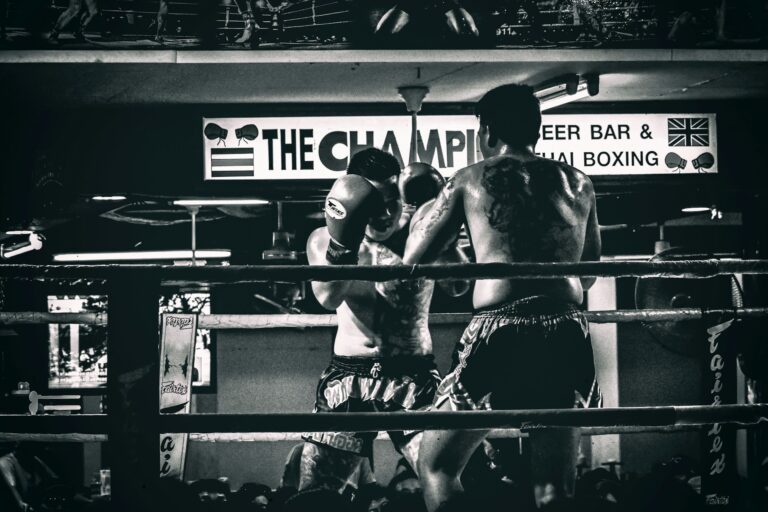
Photo by sanjoy saha on Unsplash