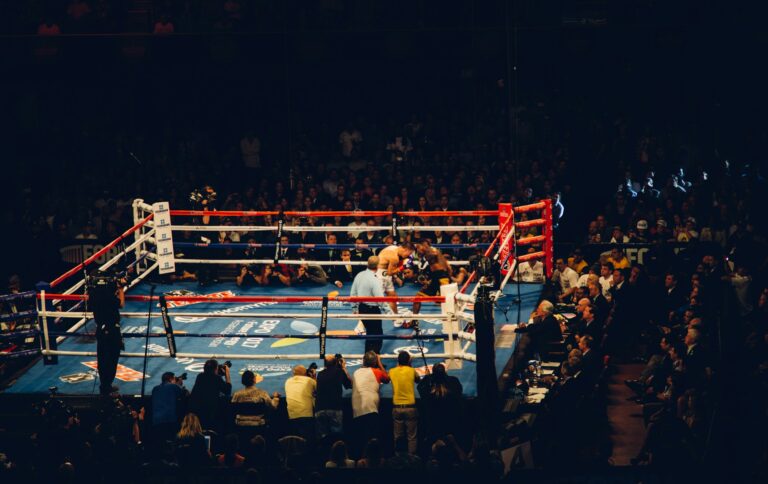
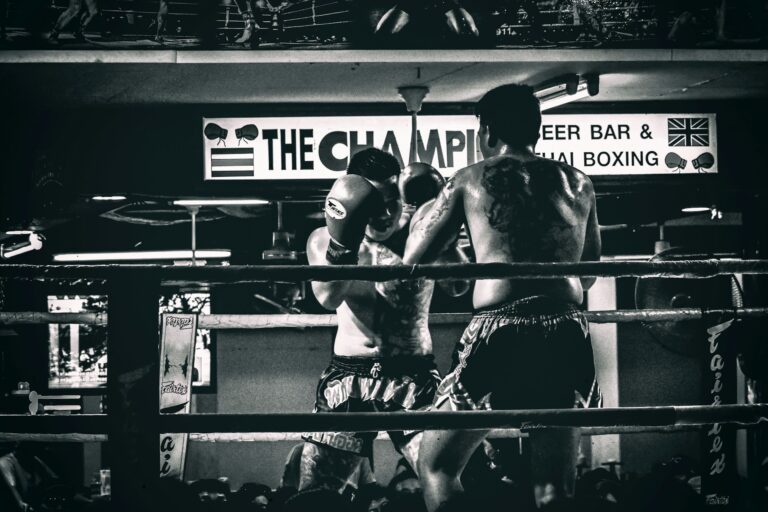
For decades, the “Cuban school of boxing” was considered worldwide as one of the most effective and successful systems in the sport. Sustained by the old principle of “hit and don’t get hit,” and backed by an endless crop of Olympic and amateur world champions, that triumphalist narrative continued gaining notoriety and recognition over the years.
But the real problem begins when that talent tries to dominate the professional ranks. For years, many justified the lack of dominant figures at the elite level by pointing to Fidel Castro’s historic ban on professional boxing on the island, and the fact that those “champions” did not have a legal or stable path to reach the paid ranks.
And although that limitation existed and marked entire generations, time has gradually dismantled that argument. Today, Cubans leave the island, sign contracts, train in the United States or Europe, fight on major platforms, and even so, the results continue to be inconsistent when the time comes for the truly decisive fights.
To get to the heart of the matter, it is necessary to analyze important points such as the conception of socialist sports within Cuba and the ways of thinking of a Cuban when he lives there or when he manages to arrive in another country and enjoy freedoms never before seen.
The Cuban style was conceived to win under a specific plan that includes constant movement, precision, rhythm control, and point accumulation. An effective model for dominating short tournaments and facing opponents who are often less prepared or less experienced. While Cuban boxers accumulate between 150 and 200 fights, fighters from other countries barely have any experience.
But there is also an even deeper difference: the way amateur boxing is interpreted. For many boxers from the rest of the world, an Olympic tournament or an amateur world championship represents a step within their development as athletes. It may be considered an achievement, but not necessarily the final goal. The true objective ends up being the professional ranks, the big money, the major fights, and historical legacy.
In Cuba, something different happens. For decades, the rhetoric of Castro’s communist system turned Olympic medals into a propaganda tool. Winning a gold medal was not only a sporting achievement; it was presented as a demonstration of the ideological superiority of the system. The Cuban athlete grew up hearing that becoming an Olympic champion practically meant becoming the best boxer in the world.
While many fighters from other countries see amateur boxing as preparation for the professional reality, numerous Cubans were educated to see amateur boxing as the absolute peak. And when they finally make the jump to the paid ranks, little by little that illusion built over years begins to collapse.
Added to those challenges is the radical transition many Cuban fighters experience after leaving the island. Many go from living with very little or nothing, to suddenly finding themselves surrounded by money, attention, and distractions they had never previously known. For some, that psychological adjustment eventually becomes part of the road to defeat.
Of course, like every rule, there are exceptions. Cases like Joel Casamayor, Erislandy Lara and Guillermo Rigondeaux prove that Cuban talent can succeed at the highest professional level when it properly adapts mentally and competitively to that environment.
When the Cuban fighter makes his professional debut, is usually already around 25 or even 27 years old. By then, many fighters from the rest of the continent already have ten years learning the real craft of this sport. They already understand the tricks, the slow moments, the management of pressure, the overwhelming mentality, the physical punishment, and above all, the emotional dimension of a long fight.
And that is where what I call the “Tin Man Syndrome” appears. Like the character from The Wizard of Oz: strong on the outside, shiny in appearance but empty of heart when the hardest moment arrives.
Many Cuban fighters look technically superior during large stretches of their fights. We see it constantly. Robeisy Ramírez, Lenier Pero, Frank Sánchez, David Morrell, Andy Cruz and others possess boxing tools that, in purely technical terms, may be above many of their opponents.
The problem is that technique only helps you to a certain extent inside a ring. Most fights are decided by emotional resistance, by willpower, or by the ability to remain standing firm when in front of you there is a man willing to walk through fire no matter how much punishment he receives.
And too many times Cuban fighters look uncomfortable and end up falling apart when the fight stops being chess and turns into war. Not because they lack talent. Quite the opposite. The problem is that they were educated for years in a system where “looking good” was an essential part of competitive success. But in professional boxing the objective is not only to win rounds; it is to break your opponent physically and mentally.
And that conversation was reignited this weekend by the shocking defeat of David Morrell Jr. against the little known British fighter Zack Chelli in England.
Because beyond the result itself something that can happen to any fighter what became truly concerning was the feeling left by the performance. Morrell once again showed part of a pattern that appears far too often in modern Cuban professional boxing: technical superiority in stretches, but difficulty sustaining emotional and competitive authority once the fight enters uncomfortable territory.
Cuban boxing continues producing extraordinary athletes. What it still has not managed to consistently produce are complete professionals capable of sustaining that talent when the hardest night of their careers arrives. For now, all that remains is to wait and see how far that “anthropological damage” caused by an outdated mentality from the past truly goes.